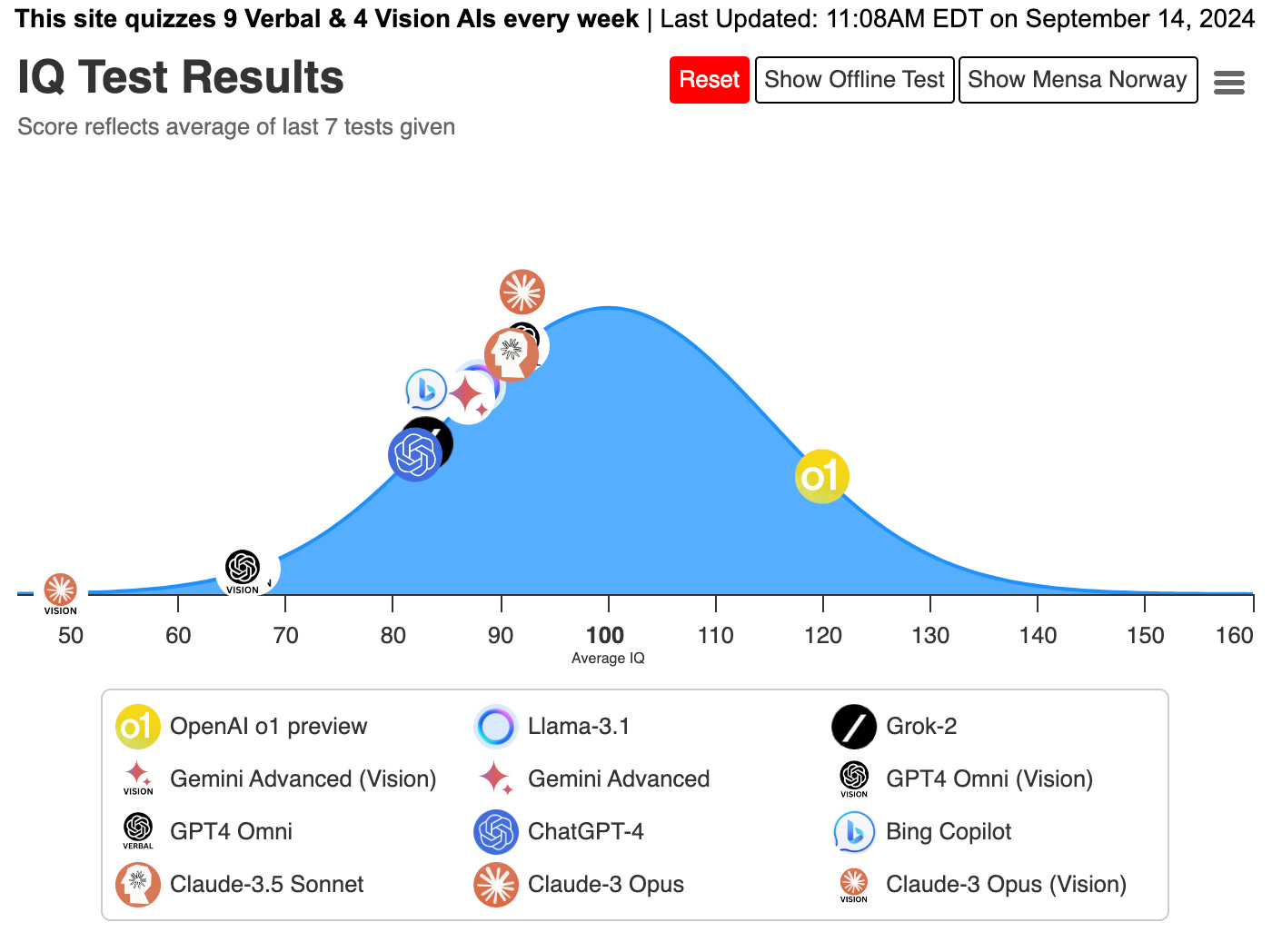
OpenAI’s new AI model, “o1,” has achieved a significant milestone by scoring around 120 on the Norway Mensa IQ test, far surpassing previous models. In a recent test, it got 25 out of 35 questions right, which is notably better than most humans. One of the hardest questions involved recognizing patterns in a grid, and although o1’s reasoning was different from a typical human approach, it arrived at the correct answer, demonstrating advanced reasoning capabilities. However, it still makes mistakes, as seen when it missed a familiar pattern on a different question.
A critical factor in these tests is ensuring the AI doesn’t benefit from pre-existing training data. To address this, custom questions were created that had never been publicly available, and o1 still performed impressively. This suggests that its improved performance is genuine and not just a result of memorization. Despite some limitations, like struggles with AI vision, the leap in reasoning ability marks a massive breakthrough in AI intelligence.
This rapid progression also suggests future models could achieve even higher IQ scores. With estimates predicting AI IQ surpassing 140 within a few years, OpenAI’s advancements are progressing faster than many anticipated. While there are still challenges ahead, the rise in AI intelligence could have significant implications for technology and industries, including AI stocks and chip-makers.